Eastern Cape hunting guide
Free-Range Hunting in South Africa
Free-range hunting in South Africa means pursuing game that can move naturally across the hunting landscape rather than being placed for a specific encounter. A genuine fair-chase experience also depends on animal behaviour, terrain, tracking, hunting pressure, weather, preparation, and the decisions made by the hunter and professional hunter.
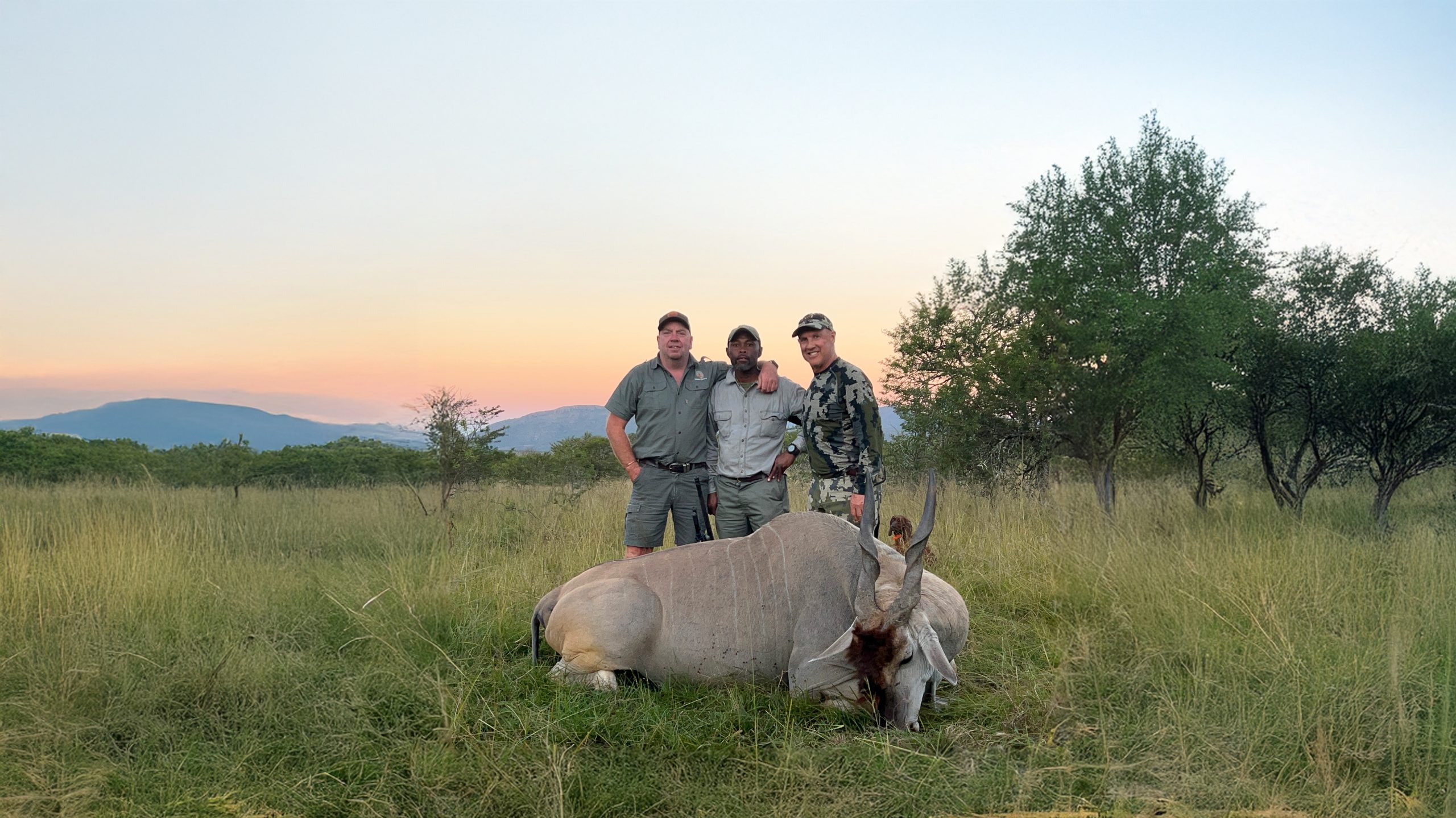
What is free-range hunting?
Free-range hunting describes the relationship between an animal and the landscape it occupies. The animal should be able to feed, shelter, breed, and move in response to weather, pressure, water, and disturbance without being positioned for the hunter. The exact meaning still depends on the property, boundaries, neighbouring land uses, and species involved.
“Free range” is not a promise of an easy hunt, a particular trophy, or a guaranteed opportunity. It also does not remove the need to ask detailed questions about the area and current arrangements.
What does fair chase mean?
Fair chase is the standard applied to how the hunt is conducted. It requires a reasonable chance for the animal to detect, avoid, or escape the hunter, together with lawful conduct, safe decisions, appropriate equipment, and respect for the professional hunter's instructions.
Free range and fair chase overlap, but they are not synonyms. An area description cannot by itself establish the quality of every decision made during a hunt. Hunters should evaluate the complete process: how the animal is found, how the stalk is conducted, whether pressure is controlled, and whether a shot is declined when conditions are wrong.
What free range does—and does not—tell you
| It can tell you | It cannot guarantee |
|---|---|
| Animals use a wider landscape and respond naturally to conditions. | A sighting, shot opportunity, trophy size, or successful outcome. |
| Tracking, glassing, wind, and movement may determine the daily plan. | That every species uses every part of the area in the same way. |
| The hunter may need flexibility and realistic physical preparation. | That fencing or management questions are irrelevant. |
| Current animal movement matters more than a staged itinerary. | That one acreage figure describes hunt quality. |
How does free-range hunting compare with managed hunting?
Free-range and managed hunting environments exist on a spectrum, and a factual comparison is more useful than an ethical slogan. Managed properties may use fencing, water, habitat work, population monitoring, or harvest plans. Free-range areas may also include working-ranch boundaries and active land management. Neither label answers every welfare, conservation, or fair-chase question by itself.
The useful comparison is whether the area, species, pressure, hunt method, and expectations are explained honestly. Hunters should avoid assuming that all fenced hunting is unethical or that every “free-range” claim automatically represents a demanding hunt.
What shapes an authentic free-range hunt?
Terrain and visibility
Ridges, valleys, thicket, drainage lines, and open slopes affect glassing, stalking routes, distance, and physical effort.
Tracking and animal movement
Tracks, feeding sign, wind, water, recent pressure, and changing cover help the team decide where to look.
Weather
Temperature, wind, rain, and seasonal vegetation can change movement and visibility from one day to the next.
Hunter preparation
Walking fitness, quiet movement, realistic shooting practice, patience, and the ability to pass a poor shot all matter.
What is Lalapa Safaris' published approach?
Lalapa Safaris is a family-run hunting outfitter in South Africa's Eastern Cape. Its existing website describes most hunts as taking place on working ranches with low fences, varied terrain, and free-roaming game, with fair chase and personal service central to the experience. Read about Lalapa Safaris for the business's published background.
Those statements should not replace a hunt-specific conversation. Confirm the property, species, boundaries, conditions, and availability for the dates being considered. Start with Lalapa's hunting overview and the existing Kudu hunting guide.
How should species planning work?
Build the species list around current availability, the hunting area, realistic time, and the kind of experience you value. A Kudu priority may require patience and flexibility, while a mixed plains-game list can involve different habitats and methods. Do not assume that every advertised species is available free range in the same place.
Use the Safari Planning hub to organize dates, companions, rifles, travel, and taxidermy questions. For a multi-species spiral-horn focus, continue to the spiral-horn safari guide.
What should overseas hunters prepare?
- Confirm flights, arrival timing, transfers, and recovery time.
- Verify current firearm, ammunition, airline, import, and export rules with official sources.
- Discuss rifle rental if travelling with a firearm is not practical.
- Prepare for uneven terrain and shooting from supported field positions.
- Review lodge accommodation and companion needs.
- Read Lalapa's Travel & Safari Info and confirm all time-sensitive requirements.
Safety and legal note: This page is general planning information. Follow the professional hunter's instructions and confirm current laws, permits, airline policies, and firearm procedures with the relevant authorities before travel.
Questions to ask a free-range outfitter
- How do you define free range and fair chase?
- Which area would this species be hunted in?
- What boundaries, neighbouring properties, or management systems affect the area?
- How is the species' presence and current availability confirmed?
- What terrain and daily walking should I expect?
- How much flexibility should the itinerary allow?
- What happens when weather or animal movement changes the plan?
- Which costs and arrangements must be confirmed in writing?
Free-range hunting FAQ
Is free-range hunting the same as fair chase?
No. Free range describes how animals use the landscape; fair chase describes how the hunt is conducted. A safari can only be evaluated properly by considering both.
Does free range mean there are no fences anywhere?
Not necessarily. Working landscapes can contain property and livestock boundaries. Ask how those boundaries affect the species and the actual hunt.
Is all fenced hunting unethical?
No. Fencing alone does not answer every ethical or welfare question. Transparency, animal behaviour, space, management, pressure, and hunt conduct all require consideration.
Can Kudu be hunted free range in the Eastern Cape?
Kudu occur in Eastern Cape hunting landscapes, but the exact area, population, boundaries, and current availability must be confirmed for a specific Lalapa enquiry.
How do I compare free-range safari quotes?
Compare the actual area, hunting days, guide ratio, inclusions, exclusions, species terms, travel support, and written conditions—not only the headline price.
Discuss a free-range safari with Lalapa
Share your preferred dates, Kudu or other species priorities, number of hunters and companions, physical considerations, and rifle plans. Lalapa can explain what is currently possible without promising a staged outcome.
Compare hunting-area terminology
Read the balanced free-range vs managed hunting comparison before discussing a specific area.