Kudu hunting in South Africa is usually a patient spot-and-stalk hunt in broken, brushy country. Hunters glass likely cover, use the wind to close distance, and rely on an experienced professional hunter to judge maturity and shot opportunity. In the Eastern Cape, changing elevation, thicket edges, drainage lines, and open slopes can all shape the hunt.
Ask Lalapa about Kudu availability and suitable safari dates
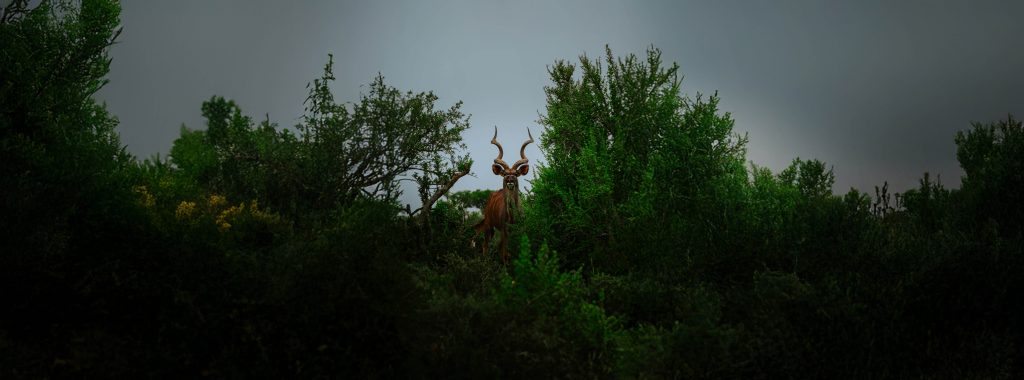
Why are Kudu a signature African hunting species?
Kudu combine impressive spiral horns with exceptional awareness and an ability to disappear into surprisingly little cover. A successful hunt depends on finding the right animal, reading the terrain, controlling the wind, and staying composed when a brief opportunity develops. Horn shape is only one part of the experience; age, body condition, terrain, and the quality of the stalk all matter.
For a first-time African hunter, Kudu can anchor a broader plains-game safari. For an experienced visitor, a Kudu-focused hunt can be planned around demanding terrain, patient glassing, and a deliberately short species list.
How does Kudu hunting unfold in the Eastern Cape?
Eastern Cape Kudu hunting often starts from a vantage point. The hunting team may glass slopes, valleys, thicket margins, or drainage lines before planning a stalk that keeps wind and cover in the hunter’s favour. The final approach can involve uneven ground and long periods of slow movement followed by a short decision window.
Typical spot-and-stalk sequence
- Glass likely feeding, bedding, and travel areas.
- Identify a bull and let the professional hunter assess maturity and conditions.
- Plan a route using wind, elevation, vegetation, and available cover.
- Move quietly and stop often to relocate the animal.
- Set up on shooting sticks or another stable field position.
- Take only a safe, clearly presented shot approved by the professional hunter.
No sequence guarantees an opportunity. Weather, animal movement, visibility, hunting pressure, and the hunter’s pace can change the plan. That uncertainty is central to fair-chase hunting.
What do “free range” and “fair chase” mean for a Kudu hunt?
Free range generally describes the animal’s ability to move naturally across the hunting landscape, while fair chase describes the standards and decisions that preserve a reasonable chance for the animal to avoid the hunter. The terms are related, but they are not interchangeable and should not be judged from acreage or fencing language alone.
Lalapa describes most of its hunting as taking place on low-fenced working ranches where game moves across varied Eastern Cape country. Hunters should still confirm the specific area, boundaries, species availability, and current conditions for the safari they are considering. See Lalapa’s broader hunting approach and current opportunities.
What is the difference between Cape Kudu and greater Kudu?
“Cape Kudu” is commonly used by hunters and outfitters for Kudu associated with the Eastern and southern Cape regions. “Greater Kudu” is the broader common name used for the species, while regional and subspecies terminology can vary between hunting, scientific, and record-book contexts.
Do not choose a safari from a label alone. Ask the outfitter which population and area are being discussed, how the animal is described for permits and trophy documentation, and whether a particular record-book classification matters to you. Lalapa’s current price list distinguishes Eastern Cape Kudu from Southern Greater Kudu; current availability and the applicable area should be confirmed directly.
How are mature Kudu judged in the field?
A professional hunter considers the whole animal rather than one quick impression of horn length. Body size, neck development, facial appearance, horn shape, tip development, behaviour, and viewing angle may all inform the assessment. Brush, distance, and a quartering stance can make judgement difficult, which is why hunters should wait for clear guidance before preparing to shoot.
Predetermined horn expectations can create unnecessary pressure. A better planning conversation covers the type of hunt, the area, realistic time, and what the hunter considers a meaningful experience.
When is the best time to hunt Kudu in South Africa?
The best timing depends on the hunting area, vegetation, weather, animal movement, and the rest of the species list. Cooler mornings can be comfortable for walking and glassing, while changing seasonal cover can affect visibility. There is no single month that guarantees better Kudu movement or success.
Ask about likely temperatures, rainfall patterns, daylight, vegetation, and recent field conditions for the exact area and dates. Lalapa can then help align the trip with the hunter’s priorities rather than a generic calendar claim.
What rifle and shooting preparation suit a Kudu safari?
A suitable rifle is one the hunter can operate safely and shoot accurately from realistic field positions. Cartridge, bullet construction, rifle fit, recoil tolerance, expected distance, and the wider species list all matter. Practice from sticks, kneeling, sitting, and other supported positions rather than relying only on a bench.
Safety note: firearm, ammunition, permit, and shot decisions must be confirmed with the outfitter, professional hunter, airline, and relevant authorities. This guide is general planning information, not firearms or legal instruction. Review Lalapa’s rifle safari planning guide and ask about bringing a rifle versus rental.
How fit should a hunter be?
A hunter does not need to be an endurance athlete, but steady walking on uneven ground and the ability to settle quickly for a shot are valuable. Prepare with regular walking, hills or stairs, comfortable broken-in boots, and shooting practice after mild exertion. Tell the outfitter about mobility, medical, or pace considerations early so the daily plan can be realistic.
What should international hunters plan beyond the hunt?
- Arrival route, airport transfer, and recovery time after long flights.
- Rifle travel or rental arrangements and current official requirements.
- Layered clothing, broken-in footwear, sun protection, and personal medication.
- Taxidermy preferences, field preparation, documentation, and shipping questions.
- Travel insurance, payment planning, and a contingency allowance.
- Activities and expectations for non-hunting companions.
Use the Safari Planning hub for supporting guides. Review Lalapa’s lodge accommodation, travel and safari information, and photo-safari extensions when planning with companions.
Planning a Kudu hunt with Lalapa Safaris
Lalapa Safaris is a family-run outfitter based in South Africa’s Eastern Cape. Its published hunting approach emphasises personal service, working-ranch landscapes, low-fenced areas, and fair-chase hunting. The exact area, Kudu classification, current availability, package structure, and other species should be confirmed for each enquiry.
A useful first enquiry includes preferred dates, flexibility, number of hunters and companions, previous African experience, Kudu priority, other species interests, desired hunting days, rifle plans, and any mobility or accommodation requirements.
Kudu hunting FAQ
How much does a Kudu hunt cost in South Africa?
The total depends on the current trophy fee or package, daily rates, number of hunting days, guide ratio, travel, rifle arrangements, taxidermy, shipping, and other species. Use Lalapa’s current price list as the factual starting point and request a written quotation for your dates.
Where can you hunt Kudu in South Africa?
Kudu occur in several South African hunting regions. The Eastern Cape offers a mix of valleys, slopes, thicket, and open glassing country. The best area is the one that matches the hunter’s preferred method, physical ability, time, and species plan.
How many days should be allowed for a Kudu hunt?
There is no guaranteed duration. More time provides flexibility for weather, animal movement, careful judging, and a broader species list. Ask Lalapa to recommend a realistic number of hunting days for the specific area and priorities.
Can a first-time African hunter pursue Kudu?
Yes. Kudu are a common priority for first-time safari hunters who prepare for shooting sticks, allow realistic time, and follow their professional hunter’s guidance.
Can non-hunting companions stay at the lodge?
Lalapa welcomes safari enquiries that include companions. Accommodation, day trips, and travel extensions should be discussed in advance so the itinerary suits the whole group.
Planning note: Prices, rules, permits, travel requirements, areas, and species availability can change. Confirm current details with Lalapa Safaris and the relevant official authorities before booking or travel.